


We’re all drowning in content. People will tell you they get too much email. They don’t read all the newsletters they’re subscribed to (and, hey, did I actually subscribe to that one? I don’t think so).
The social media feed is full of slop. Every text message is a political scam. YouTube is nothing but ads. There are a million shows on TV but, click, click, click…there’s to watch so just put on House Hunters for some background noise and scroll through the AI slop in your feed.
All true and it’s frustrating nonprofit communicators and fundraisers. Pageviews are down. Opens and clicks fall. Engagement seems off even if “followers” grow. So what’s the deal.
You’ll hear a lot about AI and the shift from SEO to AEO. I wrote about that six months ago. Read it but AI is a distraction.
The problem is that most nonprofits have never thought about how their content is valued by the audience. What is it worth to them? Is it so useful that they would pay you for content? Yes, I’m talking about all the articles, blog posts, press releases, about us pages, pretty photos, whatever.
Content generally gets written off as there for awareness, education, engagement, information. It’s the stuff at the end of a search. If it has value maybe it’s from someone landing on the page maybe subscribing to “find out more.”
People pay for content. Why not your content?
Yet the reality is that people support great content. People will even pay for great content. The newsletter 1440 is hitting over 4 million inboxes every morning. People are paying for local news (if not nearly enough). News Revenue Hub reported earlier this year that newsrooms it works with raised $33 million from 206,000 contributors in 2025. That’s $160 per person).
You’re not a news organization with reports and writers. I know.
So why are you paying staff, consultants, or freelancers to create and design content for you to sit on a website? It’s content that has no connection to revenue. You could just as easily have a one page homepage with a mission statement, staff list, and current events. And spend all your time and money working with reporters, creators, influencers, podcasters, and community advocates to do the writing and talking about you and your work.
Great content is content that is valuable to people
A lot of organizations equate content strategy with content creation. Others with beautiful and/or professional content.
But I think strategic (and great) content is simply the content that is valuable to people. It entertains. It gives answers. It makes people smarter when they talk to others. It inspires. It tells someone exactly what they need to know and do. It gives someone agency, power, security, social capital.
This is not what your advocacy and fundraising emails and social posts are doing. Those may entertain. They may empower. They may even cause concern or fright (negative values but still valuable).
But in general that “direct ask” content layer is serving you, not the audience. It’s value accrues to you, not the reader.
There’s another layer of content: the “come over, you need this” article, story, video. This stuff answers questions clearly. It solves a problem. It shines a light on the darkness. It’s easy or fun or memorable to read, watch, listen to.
The value of content that’s, well, valuable to people
Organizations often undervalue the kind of content that gives people a reason to return again and again. If you have a content strategy that can support current, relevant, topical updates you can build supporter habits and may even justify fundraising to support the content (and program work).
It's a way to bring in first-time donors and even upsell current members/donors.
These are a few screenshots from inline donate asks on stories at The 19th, Grist, and NPR.

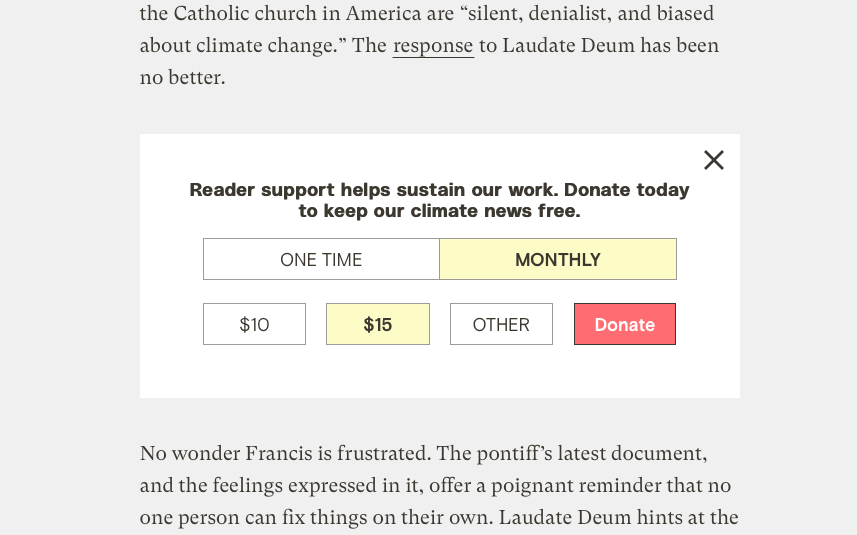
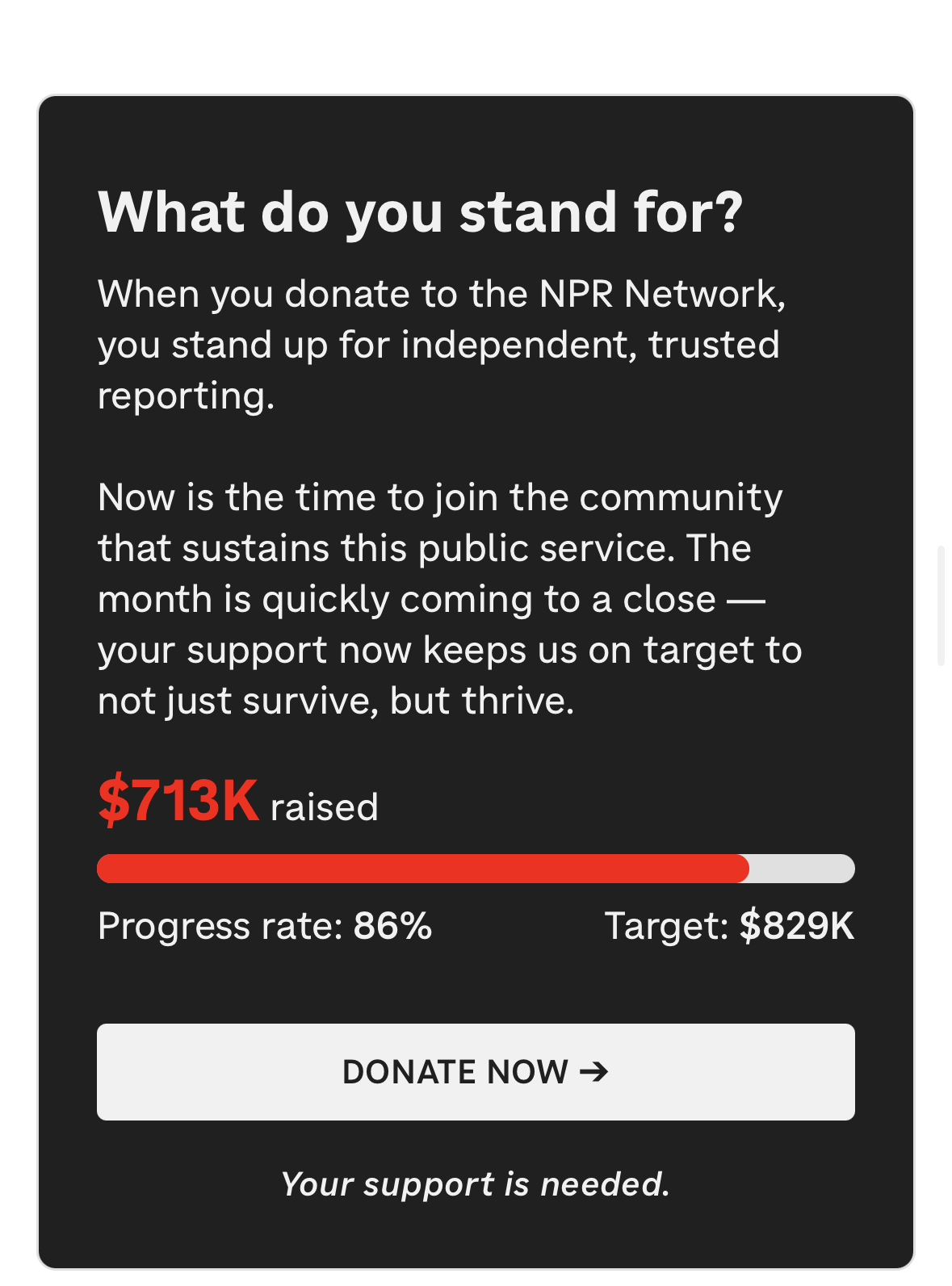
The obvious gap in the screenshots is that these are all news organizations. Though all are nonprofits and two are relatively small.
You rarely see this sort of inline or bottom of page donate ask built into nonprofit content.
But it could be. Modern content management systems make it fairly straightforward for almost any group. The question...is your content something people value, use, and return to? If it is, do this. If it isn't, why not?
If you’re producing content that’s of value and worth returning to again and again then you’re given someone a reason to join with you or donate $10/month. If they can help feed or house or care for neighbors, abandoned animals, or kids then all the better. If they can help people get access to affordable clean energy or stop gas wells from poisoning school children then all the better.
But for many people it’s not your persuasive advocacy pitch that gets them opening, clicking, and giving. It’s the valuable content that gets them there and keeps them around.