
👋 Hey there Kendra, David, Erin and Loren. Welcome to Future Community. How can we help you? What do you want to hear about? More content strategy? Fundraising? Job and career info? Click reply and let me know.
One of my favorite moments of the week was chatting with a subscriber (since last December!) who is looking for new role in global health communications. Looking for someone super adept at turning complexity into a great story? I know someone.
Reach out if you have a question, need a hand (on anything, really, though I do love me some paid work 💸), or just want to chat through things.
Everything is a distraction. Or is it?
I'm probably going to regret saying what I think about topics unrelated to why you you're subscribed to this newsletter but, hey, it's my newsletter.
FYI the following section contains personal opinions and touches on violence. Read if you like or hop on down to regularly scheduled programming.
There's a frequent analysis of almost every crazy seeming thing that the President and his administration does. The insults, the threats, the terrible staffing choices, the demolition of the White House, cutting down 500 trees in DC, building a triumphal arch, etc. etc. etc. It's all a distraction you will hear. A distraction from the rampant corruption, pointless wars, and street corner abductions of citizens and legal residents. During Argentina's Dirty War they called these people desaparecidos. At least the bothered to create a name for them. In America, we just don't really talk much about it.
It's overwhelming. Of course one tunes it all out. Then eventually the tuned out stories (and there are so many now) come home. It always does. And in a world full of distractions, instead of action, you're just left to figure it out yourself, I guess.
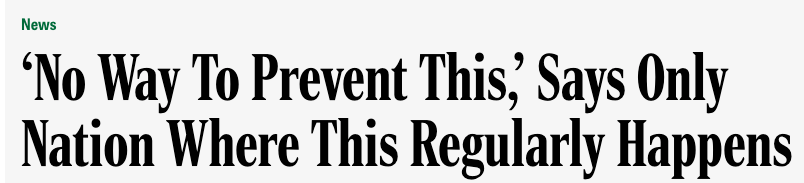
Yesterday a 16 year old with a long gun walked up to the doors of Silver Rail Elementary School in Bend, Oregon, and shot the doors to get into the school. Inside he shot and killed four people including three children who were 5, 8 and 11 years old. An adult teacher was also killed. Two other people, a 7-year-old and another teacher, were critically injured.
This was once the sort of story that would be national and even international headline news for weeks. Little would be done as a result. But it would be conversation.
Today, this particular story is barely a blip outside Bend and the surrounding area. Not that anyone does but it you go to my hometown paper's website and scroll scroll scroll you will eventually find a headline linking to an AP story.
Also at home, my wife and I heard about the story and never even mentioned it and she got ready this morning to drive to the elementary school where she's a principal responsible for the care of 400 students ages 3 to 12 and several dozen staff members.
Yesterday, coincidentally, they held their first lockdown drill of the year. They do them monthly. They're continually traumatic for everyone involved.
There will be a couple hours of debate somewhere. Not in Congress. They don't even convene any more. Right? At least The Onion tells it to us straight. Take care of your people. It doesn't appear that this country cares to do so.
What Works in Online Fundraising
Online, especially year end, fundraising success is 83% showing up and making the ask.
The secret sauce is this: build a plan around the fact that almost nobody gives without being asked. It’s about sending the email and posting the post. And doing it again. And again. And (yes) again.
Jeez. That sounds crass and boring and kinda mechanical. What about story and emotion and building relationships that demonstrate trust and respect for the donor.
That all matters, too. I've worked with groups and written time and again about how to build habits, relationships, and trust.
You and your coworkers are not your audience. Most of your audience sees very little of your stuff. That includes people who love you and your work.
And many who do see your emails and socials and videos and post don't have time to deal with it in the moment.
Doing the work also means:
- Making the ask in many channels. Not just email. Not just social. Not just direct mail. Not just private networks (you do have some slack or whatsapp or similar channels going, right?).
- And, again, making the ask on those channels more than once. Attend to channel norms, of course.
- Making a clear ask with clear impact and meaningful outcomes.
- Put your story, your call to action, your message everywhere. Don’t make asks in email and assume that people won’t go looking at your website for more info. People do that. The message needs to be consistently repeated across channels - and easy to act on everywhere.
- Making the action easy. This is about usability, form design, and knowing that people don't just read an email and click a link and give. People aren't trained seals. Many if not most people read something (maybe even that email) and think "oh, cool, I should check this out and maybe give some money." So they come to your site and look for the message you planted in their head and/or the big donate button and form. Make it easy. Hell, put a donate form right there in the center of your home page. Not kidding.
- Make giving cool. Maybe even fun. Okay, we can keep on being serious and boring. I get it. Fun is nowhere to be seen in the brand book. BUT I do encourage you to lean into social proof and showing (not just telling) people that they are part of something big. This is why many organizations have celebrity spokespeople or email senders. It's not just about attention. It's about showing that being here and giving to this group is a legitimate action that people you trust are doing. This how and why creator engagement can help. It's why testimonials work, even from random supporters.
Please reach out if you need an extra hand or just want to talk about any of this. Click reply or email ted@brightplus3.com.
And here's a special announcement if you got this far and are still wondering where that 83% number comes from: I made it up

Bright Ideas ☀️
Smart people. Big questions.
1/ The story Food Aid Enrollment Tanks After SNAP Rule Changes caught my eye via today's Upturn.org newsletter. HR 1 cut money for food aid around the country. Bad. It also turned up the complexity and procedural hoop dials. This has as much to do with falling SNAP coverage as the money.
Making benefits (or voting) hard to access is a tried and true method used by bureaucrats (and, let's just say it, racists) of excluding people from society.
It's also a reminder to organizers, campaigners, and even content designers that not everyone will "just figure out" how to attend your event, contact their legislator, or pick their way through a multi-panel donate form. Be clear. And helpful. And kind.
2/ A Super El Niño Year for Local News is what Northwestern Medill's latest State of Local News report calls 2026. On average, three newspapers closed every week the past year and 238 US counties have local news source.
3/ I've read Garret Graff's latest essay on the pervasiveness of authoritarian and fascist governance practices that would have seemed impossible ten years ago. Graff points out that for most Americans little has changed. That and disengagement by the mainstream media (and Congress, I'd say) , is what's allowed an unthinkable shift. It parallels the way climate change impacts are felt. For most people, there have been small differences (gosh, it does seem hotter and smokier every summer) and while there's profound climate reporting out there, it's practically a fringe action.
4/ Dan Sinker cuts to the chase with his An Open Letter To The People Writing Lengthy Posts About 'Why I'm Going Back to Twitter'.
5/ The Only People Talking to Missouri Voters About Trans Kids are Conservatives—and These LGBTQ+ Canvassers by Evan Urquhart via The 19th. Canvassing is THE HARDEST WORK in political or advocacy campaigning. It can also be some of the most life (and vote) changing.
6/ Do we overcomplicate and overthink what it takes for organizations to bring community together? Priya Parker's 5 ways to gather without breaking the bank speaks to how friends, colleagues and small groups can get together in person without a focus on dinners, drinks, and other high cost circumstances. Some of these ideas, like the "Hot Take Party" can be starters for simple online and in person gatherings.
7/ In an episode out today, Eli Stonberg joined The Great Battlefield podcast to talk about livestream fundraising and why it beats deadline driven emails and texts. I would LOVE to hear from anyone who has done livestream fundraising for an advocacy campaign/organization. I think few if any groups have the engagement to pull this off. But I could see the potential in a collaborative livestream around a hot/timely topic.
Events and Training
- Reflecting Back on 2026: Nonprofit Tech Success Stories & Lessons Learned - a free online event hosted by NTEN DC on October 29th.
Want to get your event or training out to the Future Community network? We're happy to share. Click reply and make sure we know about it.
Future Community Jobs
Juicy jobs incoming. Get a full list on Tuesday or check the always updated Future Community job list.
- Nonprofit Mobilization Coordinator : Rebuild Local News [Remote in the US]
- Programme Officer, Operations : Article 19 [London] ⏱️ November 10
- Communications and Digital Associate : Deploy Action [Remote in the US]
- Environmental Program Officer, Climate and Agriculture : Patagonia [Ventura, CA]
- Manager of Membership and Engagement : The Conservation Alliance [Remote in the US] ⏱️ November 6
Hi. I'm Ted Fickes. I run Bright+3 where we help teams in progressive spaces create content and stories that build community so that organizations turn supporters into leaders. I also write Future Community (this newsletter) and run Future Community Jobs.