

I would like to have a clear picture of how AI could or will change how we do content and communications. I'd also like to know how it is changing storytelling and its impact and value right now. I don't think anyone can speak to this.
Communications, especially digital, comes at us in firehoses of email, social media, texts, and messaging apps. Words, sound, video surround us. And AI accesses content creation everywhere. All the time. AI is everything and nothing. It is like disinformation. We either question everything we read, hear, and see. Or we stockpile some of our trust away like a stack of dollar bills that maybe, someday, we'll have reason to use again.
I convened last week's Newsletter Nerd Club for a conversation with progressive communicators about AI, newsletters, and content creation.
I don't think we came to a grand organizing theory about AI and content or AI and newsletters. We shared experiences, identified limits to AI use, talked through good use cases, and acknowledged that nonprofit storytelling and content was flawed before AI showed up. AI won't fix those flaws. And it certainly won't help unless we get focused and strategic. More on that below.
The rest of this piece a recap and look at some of the material we found and/or used while putting the session together.
Four ways content people are using AI
We spent time before the Newsletter Nerd Club asking around, talking to folks, and reading up on how content people are using AI. We found for rough categories listed here in order of frequency and impact.
- Content augmentation. Or content manipulation. This is the big one most people know about. People are using basic AI tools to brainstorm subject line ideas, help with editing, or clean up text. They're taking big pieces of content and asking for help cutting things down into chunks for small articles, social posts, video scripts and more. Some are looking for help turning a list of ideas into an outline or thesis. Some of this amounts to supercharging editing tools that have been built into content software forever: mediocre spelling and grammar checks in Word or Google docs evolved into Grammarly, for instance. Some of this, like reworking long pieces into shorter ones, relies on user guidance and the ability of AI (or lots of software) to hold and move a lot at once.
- Data analysis. A lot of content folks are using AI tools to better understand qualitative data. You can dump in a column of responses and get a summary, quotes, high level takeaways. This is similar to AI notetaking during meetings and calls. AI (see above) can identify and manipulate patterns in text and numbers. I'd caution anyone, especially nonprofits, to be careful with user/client data. No organization should be allowing staff or consultants to throw client or member data into a Claude window without clear guardrails. Another variation of data analysis is AI analyzing your content with things like Content Health Check. More on that below.
- Coding and design. Content and newsletter people are using AI to mock up designs, turn layouts into a more finished design, and turn designs into code. Dan Oshinksy describes a couple examples in his February, 2026, piece about using AI on newsletter projects. We're seeing this functionality built into design tools and other newsletter and email hosting tools. But, presumably, many folks will continue using Claude or whatever to do simple idea/design to code transformations.
- Workflow and process automation. A fourth bucket of AI use is less common and visible. But process automation is going to become a staple of AI for content creation. This also gets one into true "AI to create content" territory. A simple version of this is your email host (anything from Beehiiv to Mailchimp to Hubspot) running automations (perhaps predictive ones) to create and send email or other content. These tools are moving from "your credit card expired" emails to fully formed campaign updates. There is growing ecosystem of AI content tools that will build pieces content or support full campaign creation, implementation, and reporting. Optimizely, which has gone from a content testing tool to a full blown AI for content company, describes this here.
AI and actual content strategy
Most everything described above is tactical: help me do more, help me be more efficient, help me understand the information, help me say more of the right stuff to the right people.
If you don't have a good content strategy then doing more stuff probably isn't going to help you reach your goals. If you were churning through subscribers before you'll just churn through more subscribers.
At Newsletter Nerd Club we heard from Julius Honnor of Contentious about the Content Health Check tool/project.
Content Health Check is a content auditing tool with an AI underbelly. It continually analyzes a domain/website against a set of 20 parameters that you define based on your content strategy, brand guide, goals and more.
The “project” part of this is that Julius is looking at extending it into email/newsletters and other content types. Reach out to him if you have thoughts on that. You can find Julius on email [julius@contentious.ltd] and LinkedIn.
How actual content and newsletter people are using AI
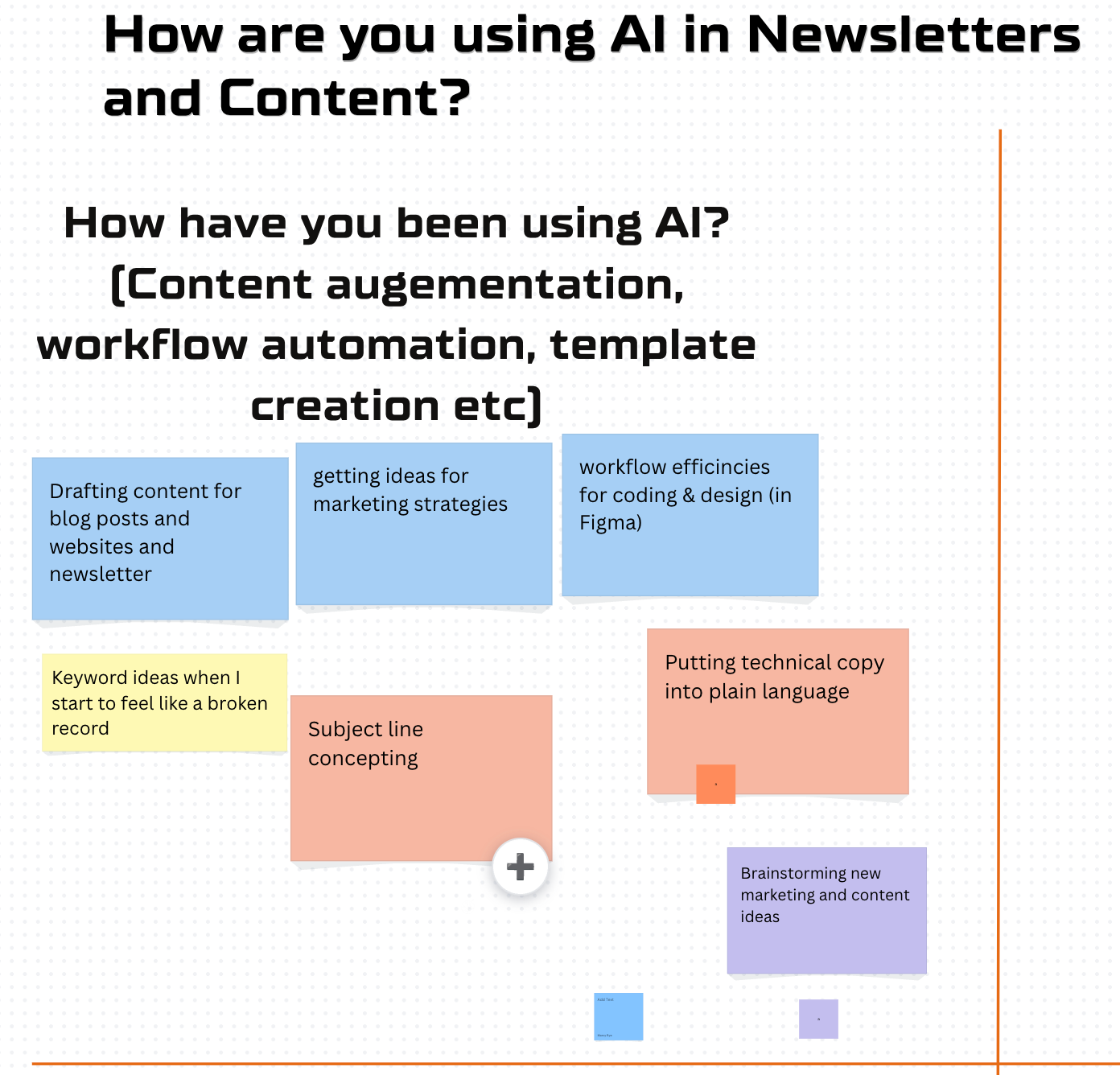
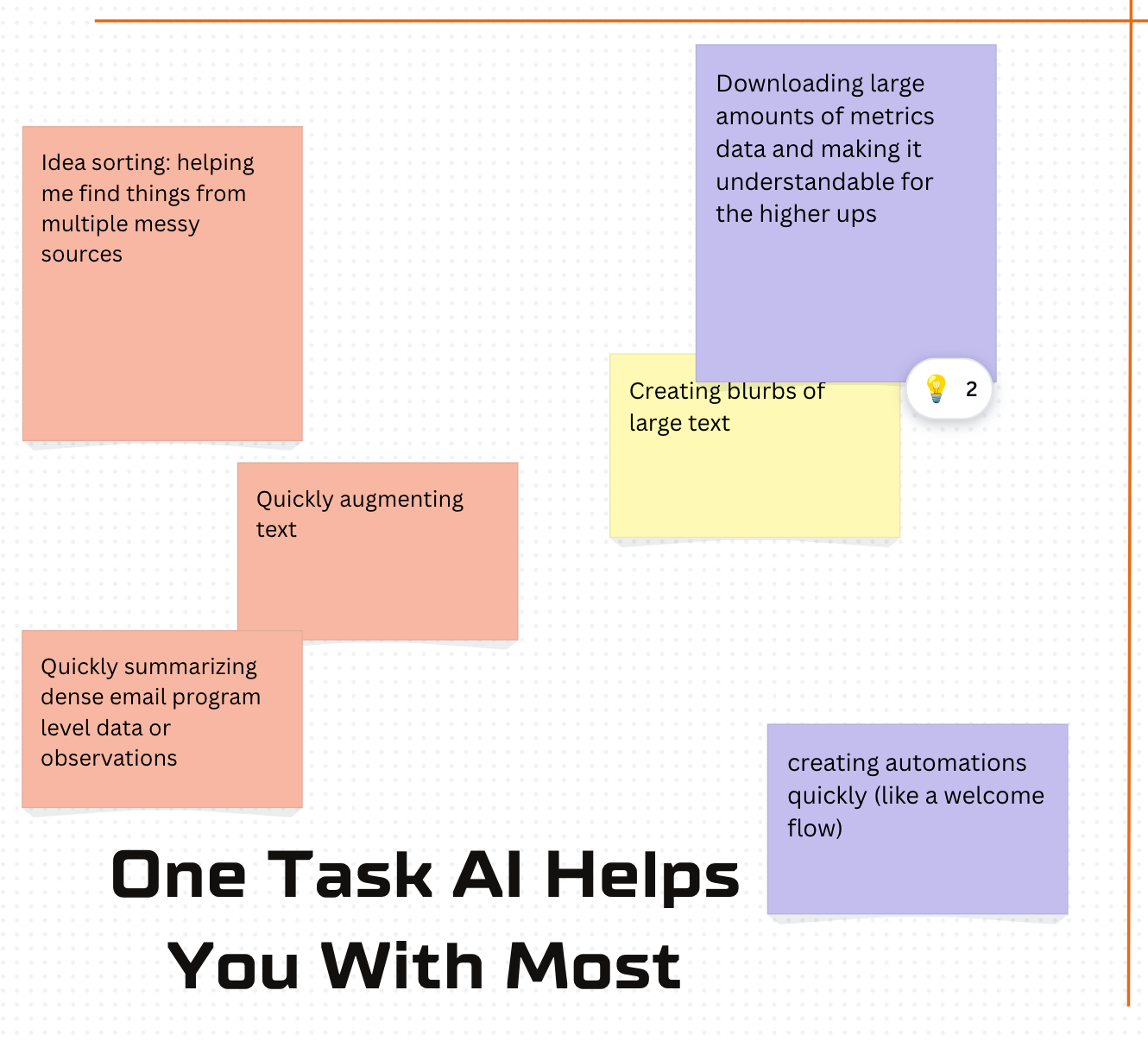
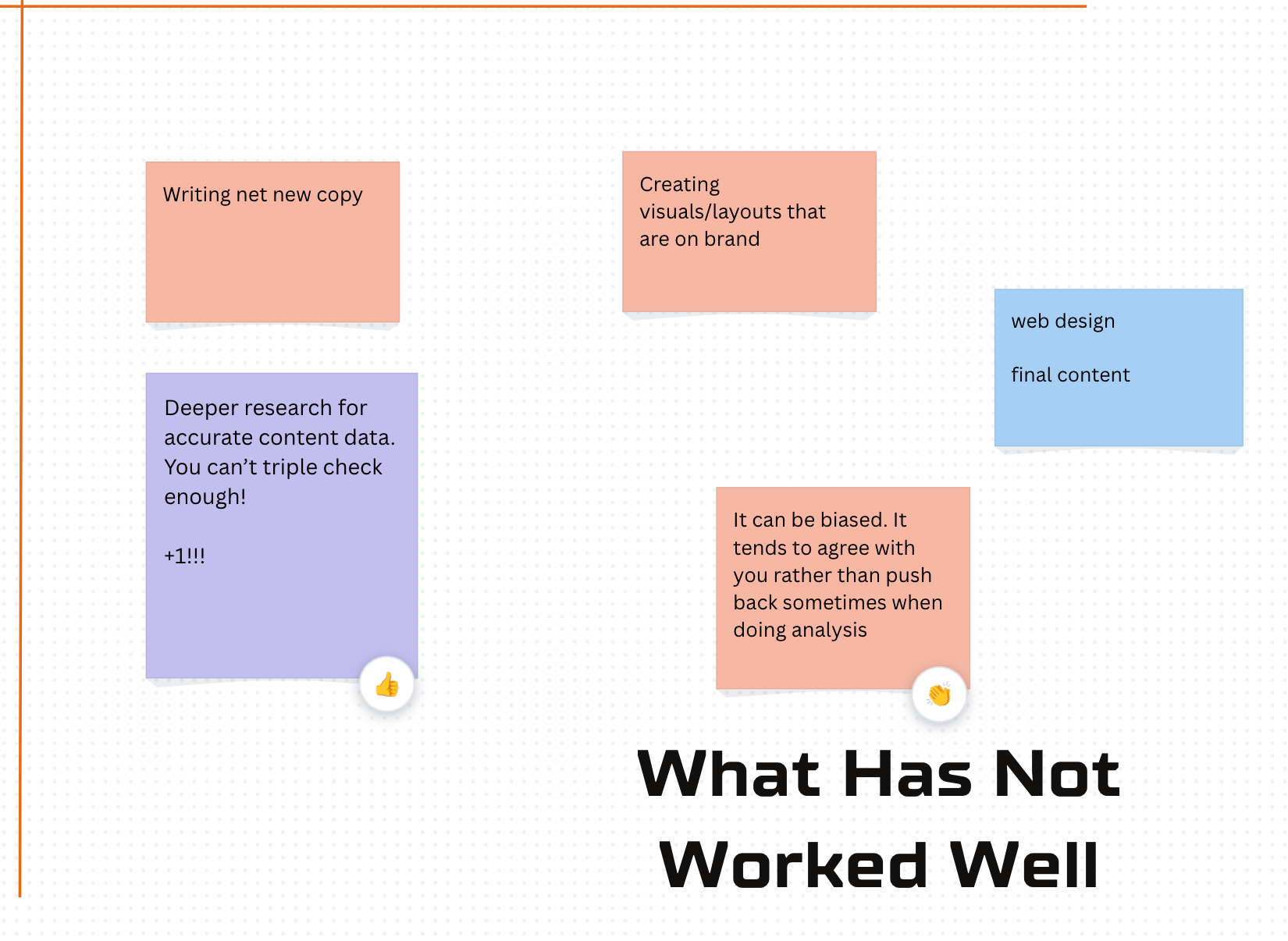
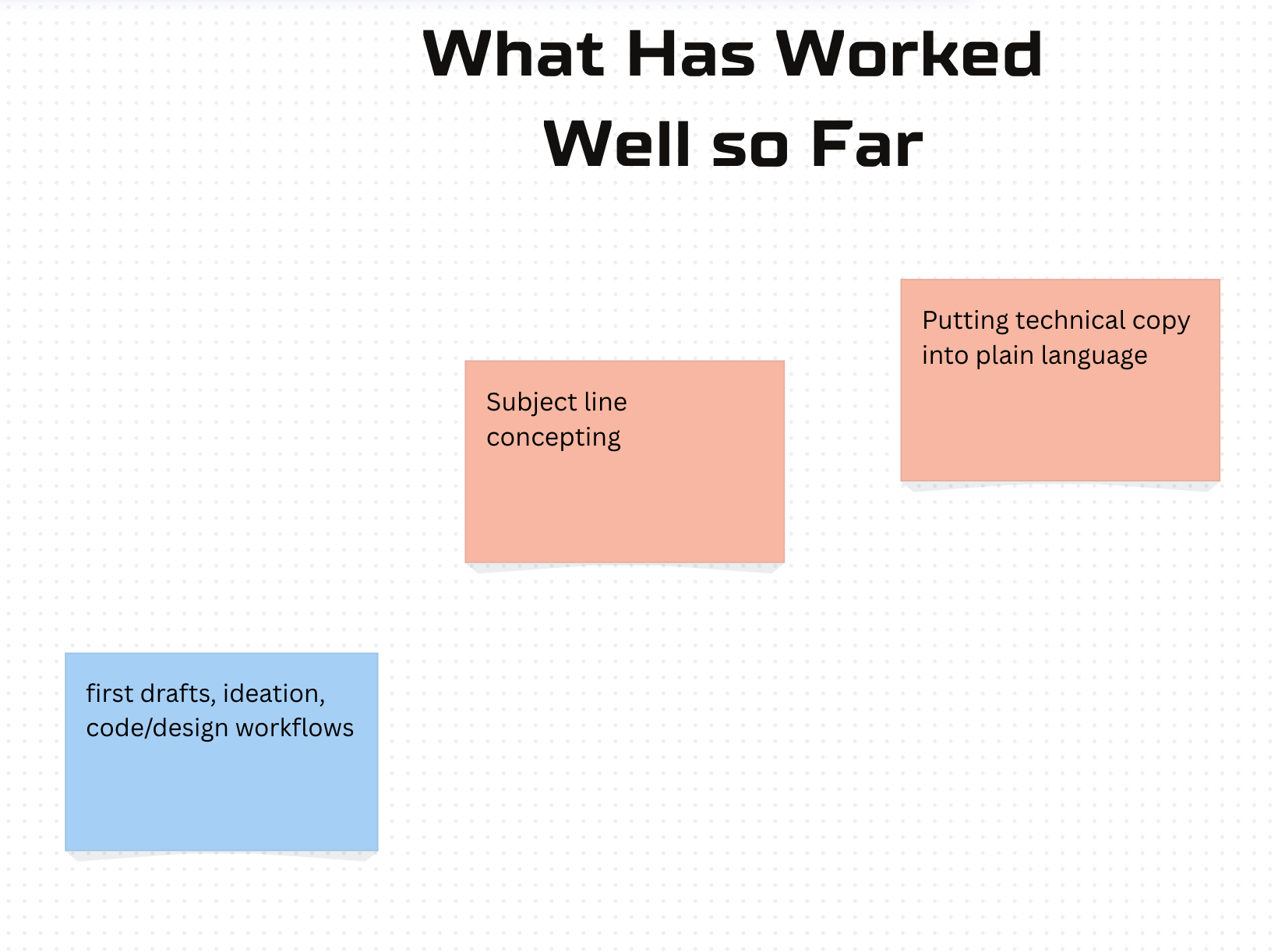
During Newsletter Nerd Club we used a whiteboard where folks could share how they're using AI for content, what's worked well, and what's been challenging. "Worked well so far" was a bit of a bust.
Read more about AI, newsletters, and content
Here's some more of what we used to put together the Newsletter Nerd Club session and/or shared during the conversation.
- How Dan Oshinsky of Inbox Collective uses AI in his newsletter. Dan is all newsletters all the time and always a useful resource.
- A Media Operator's article about 6AM City changing its business model by adding hundreds of fully AI-powered newsletters. I’m not a fan of zero-human newsletters and content. Possible ≠ good. But to be fair, the business model of scaling an ad-supported local newsletter business with human writers and standard tech tools seems rough at best.
- Not Another AI Think Piece in which Sam Landenwitsch of Chorus AI makes the case that applying AI tools to campaign and nonprofit emails and other content won’t replace content creators and writers. It will mean organizations need more writers and content specialists.
- New_ Public’s AI and Info Environment reading list ← a public resource that keeps growing
- Pangram’s report AI Content Is Everywhere on Social Media, Especially LinkedIn (FYI if you’ve heard about Substack launching an AI content detector, Pangram is the company behind that detection)
- The most successful AI at our conference wasn't on the stage by Hannah O’Rourke at Campaign Lab.
- Navigating the AI landscape: How news organizations are creating trust-based AI policies by The Lenfest Institute
- Who can we trust about AI? by Lex Roman. A very good question!
- Nonprofit AI Policy Builder is a free tool built by Fast Forward to help nonprofits create a custom AI usage policy.
- How to use AI to build better newsletters? A strategic workflow guide from Miro. This is a software sales piece, of course, but there are useful ideas here for folks thinking about if, how, where AI can fit into the content workflow.
And here are a couple well done philosophical takes on AI and content.
- Fakes of the Future: Literary credibility in the age of AI by Krzysztof Pelc for Los Angeles Review of Books.
- And Your AI is Not a Tool by L. M. Sacasas at The Convivial Society.
What's next for AI and content?
The open conversation at Newsletter Nerd Club trended towards questions of content strategy and, looking ahead, the value of content as people question the origin, accuracy, reliability, and intent of everything they read and see.
Folks raised issues of AI, content, and trust. That conversation goes beyond the scope of an hour together. I’ll offer that organizations, political candidates, and others have long abused trust and time with their content. AI just lets you do it at scale, perhaps. The reality remains, AI is casting a shadow on the credibility of everything you post. Is it real? How do you know? Does it matter?
I’d like to believe that human content wins; that content born of human connection and human storytelling will stand apart as valuable. This should be a superpower of nonprofits, newsletter creators, and others who respect and enjoy people. Right?
I hope you'll join the conversation at our next Newsletter Nerd Club.