
👋 Howdy Taylor, Timothy, Thomas, Adam, Jennifer, Zachary, Diane, Carine, Rebecca, Mo, Yael, Derek and Sofie! It's great to have you here at Future Community!
Let me know where you're from and what you're looking for here. How can I help? Or send along any questions. Reply here or schedule a chat.
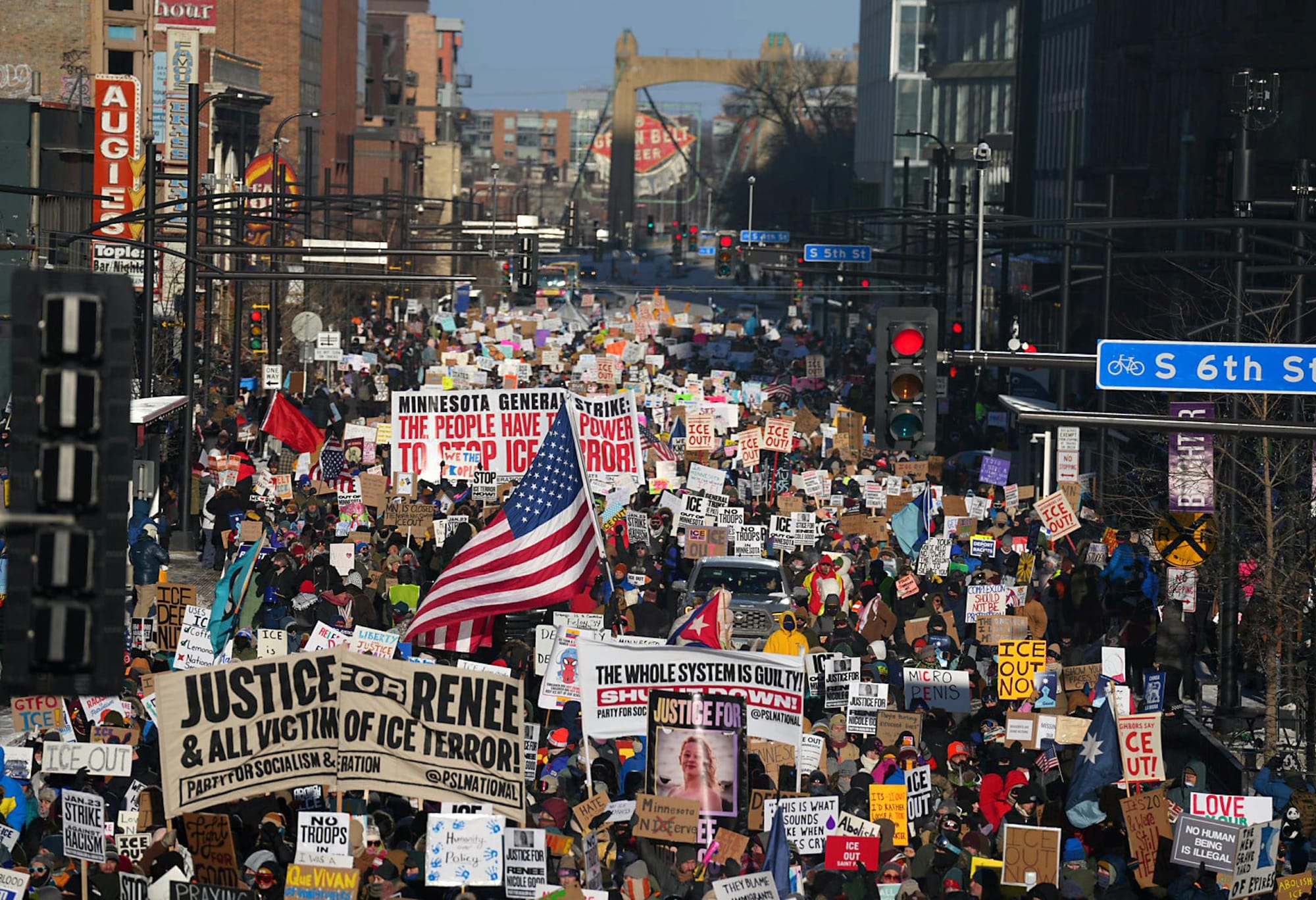
Meanwhile, in Minneapolis today...
Are creators the future of democracy?
That Harvard Magazine headline may actually undersell a Kennedy School hosted conversation I listened in on yesterday - one that brought together some colleagues and heroes (and colleagues who are heroes).
Sure, creators have a role in shaping (and/or shaking down) the future of democracy. But the roles are multiple, varied, and there's much to be done by creators and civic orgs writ large.
I wanted to share a couple takeaways here because the future of democracy is being fought over right now in DC, state legislatures, and on American streets.
It's also being fought over in social media posts, videos of ICE officers filmed from sidewalks, and even in the emails we send asking people to take action and give money.
We have a lot of grand ideas but too little collaborative infrastructure to make civic engagement happen with or without creators.
We, the folks working in/around democracy issues and civic participation, need to do a far far far (far-cubed!) better job documenting and sharing our practices, tests, and experiences with communications, marketing and storytelling.
Overall, this conversation was an example of too much "big think" and not enough collaborative infrastructure building. Give me examples. Share case studies. Feed experiments and get the results out there.
Make the democracy landscape much more visible to far more people working in/around civic engagement projects (which is most every NPO/NGO anywhere).
Matt Fitzgerald spoke to this with something I paraphrased in notes as: "we haven't built out the social infrastructure for knitting our networks / voices together."
Yes! More infrastructure that makes work possible. Less policy wonkery.
We need to fight for people. Not democracy.
A lot of people working in and around big D democracy don't believe it's worth saving. A few panelists implied/said this. And it was a recurring theme in the zoom chat.
To put it another way: how many people want to fight to protect our current democratic institutions?
Aside from those paid to do it, I'm not sure many are that interested in the current setup.
Look at American history. Look at the current moment. Democracy works for some and that "some" keeps shrinking while getting more greedy and violent in its pursuit of protecting its "democracy."
We need clearer visions of future alternatives that big tents of people can and will work towards.
This is a challenge that can't be left to Congress (ha!) and not "democracy" experts. Creators, writers, journalists, and community organizers are the messengers of the future. It's incumbent on our organizations, community leaders, and communications folks to supply them with ideas, frameworks, and tools to share not just visions for the future but the work of turning ideas into plans.
I found this brief essay from December helpful here: Invitation to 21st-century Orators, Griots, Futurists. In it Malkia Devich Cyril and Jen Soriano invite us to "orient our communications toward connection, toward life." We are not fighting to save a concept here (e.g. democracy). We are building connections with each other so that we have the power to create and sustain something new that people will work for with love and care.
Bright Ideas
This Digital Strategy and Content Creation training put together by AP looks brilliant. It's open to everyone. You don't need to be a journalist. Starts next week.
The New Digital Best Practices training run by Elana Levin and New Media Mentors starts Feb 5.
How storytelling can open the door to thriving futures via The People's Newsroom.
Solutions stories are a compass for readers by Yessenia Funes at Society for Environmental Journalists.
What Do We Want? To Stop Using Google Docs. When do we want it? TBH, it's complicated. Many progressive and social justice groups want to get away from big tech. Google, docs in particular, represent both dependency and a pain point if trying to move. This is a good case study by Dirk Slater in Internet Exchange.
Future Community Jobs
Be sure to check out the full job list here.
Audience, content, journalism and news roles
- DC Host, Podcast & Social : City Cast [Washington DC]
- Investigative Data Reporter (Freelance contract) : The Examination [Remote]
- Specialist, Donor Operations : NPR [Remote in the US]
- Head of Podcast : Bloomberg [New York]
Communications
- Senior Manager, Communications and Media Relations : Peninsula Open Space Trust [Palo Alto, CA]
- Media Director : Working America [Washington, DC]
- Senior Communications Organizer : Corporate Accountability [Boston / Remote in the US]
- Communications Associate, Client Services : ReThink Media [Remote in the US / Washington, DC preferred] ⏱️ February 6
- Communications Specialist : Defenders of Wildlife [Washington, DC]
- Vice President, Communications : Issue One [Washington, DC ] ⏱️ January 30
- Content Manager, Editorial & Insights : Stacker [Remote in the US]
- Communications Senior Associate : Reddit [Remote in the US]
- Social Media Coordinator : New Roots Institute [Remote in the US]
Nonprofit organizations
- Chief of Staff, Energy & Environment Program : The Aspen Institute [Washington, DC]
- Technical project Manager : DataKind [Remote in the US]
- Hub Manager, Right to Zero : EarthJustice [San Francisco / New York City / Chicago / Los Angeles / Washington, DC / Seattle]
- Program Director, Launchpad : Ocean Visions [Remote in the US]
- Manager, Explorer Elevation : National Geographic [Washington, DC]
- Senior Director of Policy : United Teen Equality Center [Lowell, MA]
- Chief Experience & Revenue Officer : The Colorado Symphony Association [Denver, Colorado]
- Government Affairs Director : The Association of Fish and Wildlife Agencies [Washington, DC]
- Manager of Campaigns : New Roots Institute [Remote in the US]
Fundraising and Development
- Development Manager : Ella Baker Center for Human Rights [Oakland]
- Development Officer : We Make the Future [Remote in the US] ⏱️ March 20
- Senior Development Associate : The Examination [Remote in the US / New York City preferred]
- Development and Marketing Manager : Rising Organizers [Washington, DC preferred / Remote in the US] ⏱️ February 15
- Development Director : Upstream [Remote in the US]
- Vice President of Advancement : First Descents [Denver preferred / Remote]
Foundations and Philanthropy
- Deputy Director, TAAF Cities and Head of Data and Research : The Asian American Foundation [New York City]
- Program Director: Women Moving Millions [Remote in the US/ New York City]
- Senior Program Officer : The Coleman Foundation [Chicago, IL]
- Senior Director, Strategic Partnerships & Advancement : Taproot Foundation [Remote in the US]Agencies, politics, products, projects & more
- Deputy Director, Operations : Pocketbook Strategies [Remote in the US]
- Influencer Marketing Manager and Social and Influencer Marketing Specialist : Cotopaxi [Salt Lake City / Remote in the western US]
Agencies, data, politics, products & more
- Community Engagement Manager, Reddit : Mozilla [Remote in the US or Canada]
- Deputy Director, Operations : Pocketbook Strategies [Remote in the US]
- Influencer Marketing Manager and Social and Influencer Marketing Specialist : Cotopaxi [Salt Lake City / Remote in the western US]
- Senior Director of Research & Evaluation : Upwardly Global [Remote in the US]
- Demand Generation Manager : Engaging Networks [Remote in the US or Canada]
Future Community is a product of Ted Fickes and Bright+3. Reply or visit Bright+3 to get in touch and learn more about our work. It's fabulous.